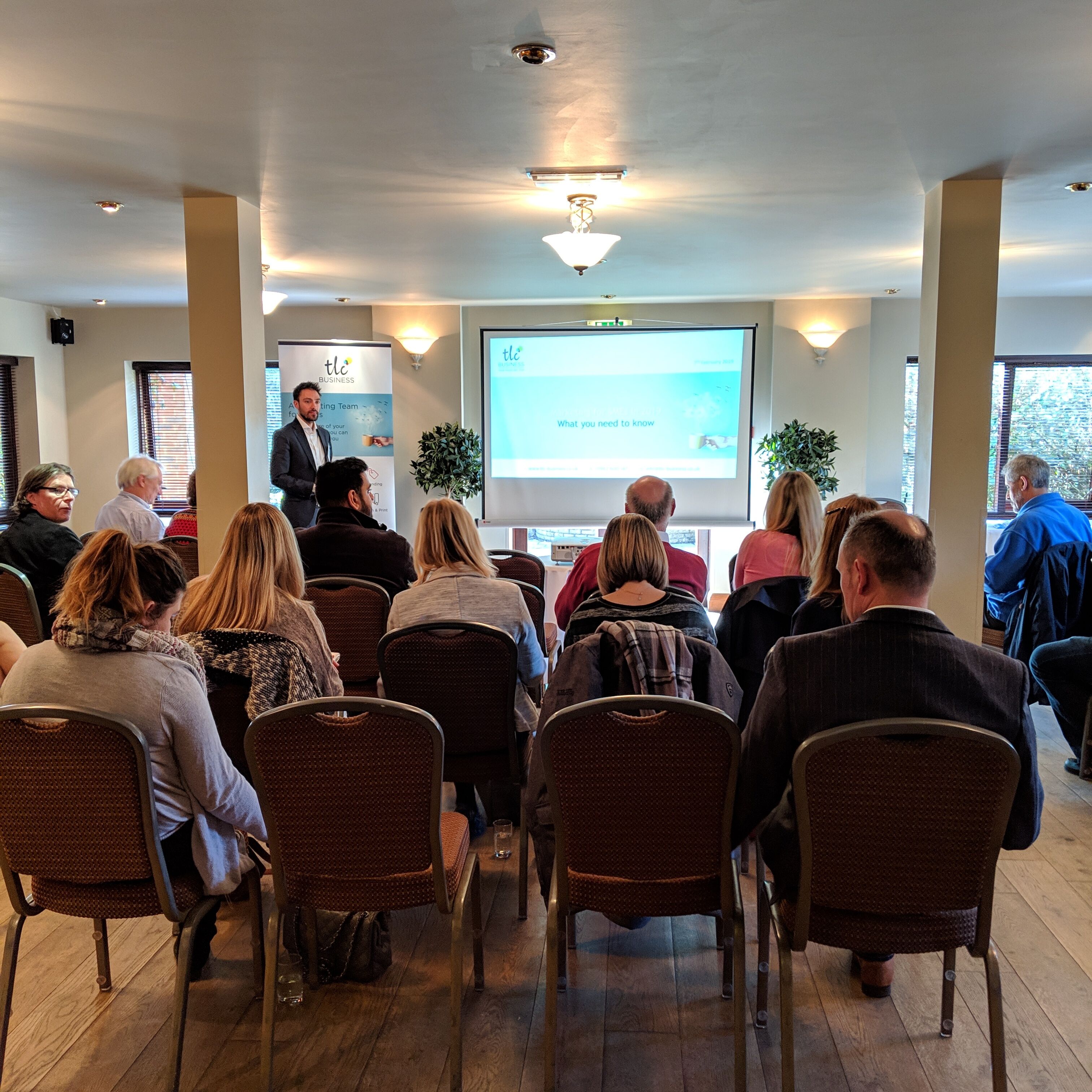
TLC Business would like to thank all of the attendees who came to our annual marketing lunch last Thursday 7th February at the East Horton Golf Club in Fair Oak. We hope you enjoyed the session and were able to take away useful information and tips to help with your marketing in 2019.
During the seminar we discussed hot marketing topics, trends and tips for 2019; including which marketing channels are most effective for SMEs, updates on GDPR and the ePrivacy regulations, how to get the most from social media, PPC advertising, SEO best practice and more.
The event attracted a wide-array of SME businesses from in and around Hampshire, including IT consultants, architects, HR trainers, engineers, legal services and more.
If you’d like to be informed about future marketing events or availability of our free marketing ideas sessions for SMEs, let us know by emailing Sophie at sophiewells@tlc-business.co.uk or give us a call on 01962 600 147.
Social media marketing was at the forefront of many businesses’ marketing strategy in 2018, with over 3 billion people worldwide using social media each month. That’s a whopping 42% of the total global population! It’s no wonder businesses are incorporating it into their marketing mix.
Social networks are still attracting more and more users each day; in fact every second, 11 people use social media for the first time. So with uptake figures like these, alongside the global growth of smart phones users and wider internet access, social media as a global phenomenon is not going away. With 9 out of 10 social media users preferring to access their chosen social media platform on mobile devices and the number of mobile phone users in the world expected to pass the 5 billion mark this year, it is clear businesses, if they haven’t already, are going to have to re-align their marketing towards a mobile-driven society, of which social media usage is at its heart.
As consumers, we should all be familiar with YouTube, Facebook, Instagram, Snapchat, Twitter, LinkedIn and Pinterest. We may not use all of them, but the majority of us have at least heard of them or have a good enough idea of what they do. These are the big names in social media, but of course there are others that exist.
Each social media network has its own strengths and weaknesses and different ways in which they are used by their audiences. That’s why businesses need to make informed decisions on what social media channels they use in their marketing mix, and how to use them most effectively, to ensure they leverage each platforms’ unique strengths. To help, we at TLC Business have put together some stats to help you determine which platforms are right for your business and how you can use them to their full potential.
Facebook
On average, there are 44 million active users on Facebook in the UK, 52% of which are female and 48% male. The largest age bracket is 25-34 year olds, followed by 18-24 year olds; however, more mature audiences are embracing Facebook. 83% of parents on Facebook are ‘friending’ their children and the number of users aged 65 and above, increased by almost 20% in the last 1-2 years. 13-17 year olds make up the lowest percentage of users on Facebook; determining it is not the recommended platform if you are targeting millennials.
Facebook is designed for sharing videos, blog posts and curated content. According to Hootsuite, the social media management platform, the best time to post on Facebook is 12pm-3pm on Monday-Friday or 12pm-1pm on the weekends. The recommended number of daily posts depends on your following; but according to HubSpot, if you have less than 10,000 followers you should only post once a day or less, anything more than once a day will result in 60% fewer clicks per post. However, if you have more than 10,000 followers, posting 1-2 times per day results in the most clicks and engagement per post.
Twitter
With over 500 million tweets sent every day, Twitter has 326 million users, 500 million monthly visitors and a total of 1.3 billion accounts. Twitter’s users are predominantly males between the ages of 18-24. The platform is one of the best B2B social networks to start conversations with your potential customers or industry experts, but it requires you to be active daily. Engaging content is particularly important on this platform and you should be posting frequently. The recommended amount is between 3-5 tweets a day. Wednesday is considered the best day of the week to post on Twitter and it gets the most usage at 12pm and 5-6pm. The best hours of the day to post are midday, 3pm, 5pm and 6pm and if you’re a B2B company, you’re tweets are more likely to perform better during business hours, whereas B2C companies will experience better engagement on weekends. The majority of people use Twitter to keep up to date with news headlines; therefore, Twitter is the ideal platform for sharing news relevant to your followers; such as company and product announcements. Other types of posts that perform well on Twitter include sharing relevant links, photos, GIFs, infographics and videos. However, posts on Twitter need to be kept short but remain attention-grabbing. There is a limit of 280 characters per post, including the use of hashtags and links, and also a maximum video length of 140 seconds if uploaded directly to Twitter.
Instagram
In the UK, there are 21 million active users every month on Instagram. That’s 32% of the UK population! The majority of users are female, 57% compared to 43% male, and the age bracket most prominent is 18-24 year olds, followed by 25-34 year olds. Instagram is said to be the fastest growing social media platform and it is predicted that user growth going forward will consist predominantly of those 35 and older.
Instagram is a platform for sharing photographs or videos to your profile or story; however, last year the Facebook-owned platform also introduced Instagram TV, designed for sharing more lengthy vlog-style videos or movies. Instagram audiences appreciate high-quality, aesthetically-pleasing imagery and videos; which are thoughtfully composed and presented. For businesses, the posts which receive the best engagement are product photos, behind-the-scenes shots and motivational or inspiring quotes. The platform is typically used by more B2C companies who want to reach their consumers and build their following; however, for B2B markets it is a great tool for sharing industry relevant content and showcasing company culture. According to HubSpot, the best times of day to post on Instagram are Monday and Thursday at 2am, 8-9am or at 5pm. Posts get more reach and engagement outside of work hours and you should avoid posting between 3pm-4pm. However, when it comes to video, posts at 9pm receive 34% more interactions. The recommended daily amount of posts is between 1-2 per day, providing it is high-quality content.
LinkedIn
LinkedIn is targeted at professionals and is designed for business-related content. With over 500 million members, LinkedIn is an ideal platform for establishing connections with fellow professionals, as well as promoting product launches and company announcements. Over 24 million companies have created LinkedIn pages, making it the ideal network for B2B businesses looking to reach stakeholders and decision makers. LinkedIn is used mainly by people with higher paying jobs, with 45% of people earning over $75K per annum, compared to just 13% of those earning under $30K. The average CEO has 930 LinkedIn connections. Posting once a day during the working week is recommended to reach at least 60% of your audience, and according to HubSpot, the best days to post are Tuesday, Wednesday and Thursday at 7-8am, 12pm or 5-6pm. Professionals are more likely to read LinkedIn content in the morning during a work commute. The best content for a LinkedIn company page is career and recruitment information, company culture, quotes, thought pieces from employees, including their experience working for the company, company achievements and organisation announcements. LinkedIn content, on both company and personal pages, should remain work-related and professional, and personal profiles can be used to re-share company posts, connect directly with colleagues and other industry professionals.
Snapchat
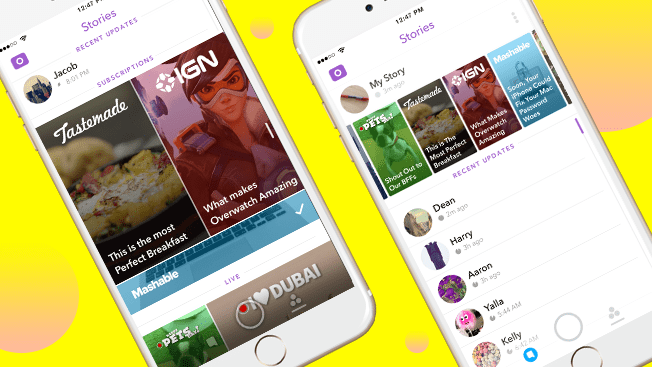
Snapchat is a picture, video sharing and messaging app and has 187 million active daily users. In the UK, 77% of those are under 25; therefore, it is particularly targeted at millennials. Snapchat is used by businesses in a variety of ways. More specifically, B2C organisations use it predominantly to promote or sell a product. There is the snapchat ‘story’ feature; which is used for sharing images or short videos with your followers and is a great way to demonstrate to your audience the day-to-day goings on in your organisation. Stories delete themselves after 24hrs, but portions of the story can be deleted at any time. There are also multiple advertising tools available within the platform, including ‘snap ads’ which are 10-second vertical videos, to geo-filters and lenses; which allow users to access a snapchat filter and take a selfie with it. The recommended time to post on Snapchat is between 10pm-1am, as this is when traffic is the highest and 4-7 uploads a week is the optimum amount.
YouTube
YouTube is the most popular social platform of them all. 1 billion hours of YouTube videos are watched every day and 400 hours of video are uploaded to YouTube every minute. More than half of YouTube video views come from mobile devices and the average viewing session lasts more than 40 minutes. Businesses can use YouTube to upload “how to” and explainer videos, product walkthroughs, interviews with a thought leader, or a direct piece to camera (vlog) discussing what’s happening in the company. If you have content to upload regularly, such as a video series, you should set up a schedule to post at the same day and time every week. However, it is worth bearing in mind that the recommended times to post are Thursdays and Fridays between 12pm-3pm or weekends between 9-11am, as these are the times when there are the most viewers available to watch your videos.
Choosing the right social media platform
Developing a social media strategy that targets the right audience, on the right platforms doesn’t have a ‘one size fits all’ approach. A variety of content and scheduling is crucial to getting the most effective results out of social networking and for building your business’ profile. Some social networks may be more fit for your business needs than others. It is certainly not necessary to have a profile on every single one and perhaps more importantly, it can have a negative impact on your brand if you have a social network profile with no posts or that has been dormant for more than a year.
If you’re looking to implement or improve your social media marketing in 2019, TLC Business can help. We have a fully managed social media service that can take care of all of your business’ social media requirements, including developing a strategy, planning and creating content, setting up profiles, growing your followers and engaging with your audience.
To find out more about our social media marketing services, give us a call on 01962 600 147 or email us on info@tlc-business.co.uk.
https://www.tlc-business.co.uk/wp-content/uploads/2019/01/applications-apps-blur-533446-min.jpg10801920tlchttps://www.tlc-business.co.uk/wp-content/uploads/2018/10/logooptimised.pngtlc2019-01-22 14:15:022019-06-13 12:29:11Which social media platform is right for your business?
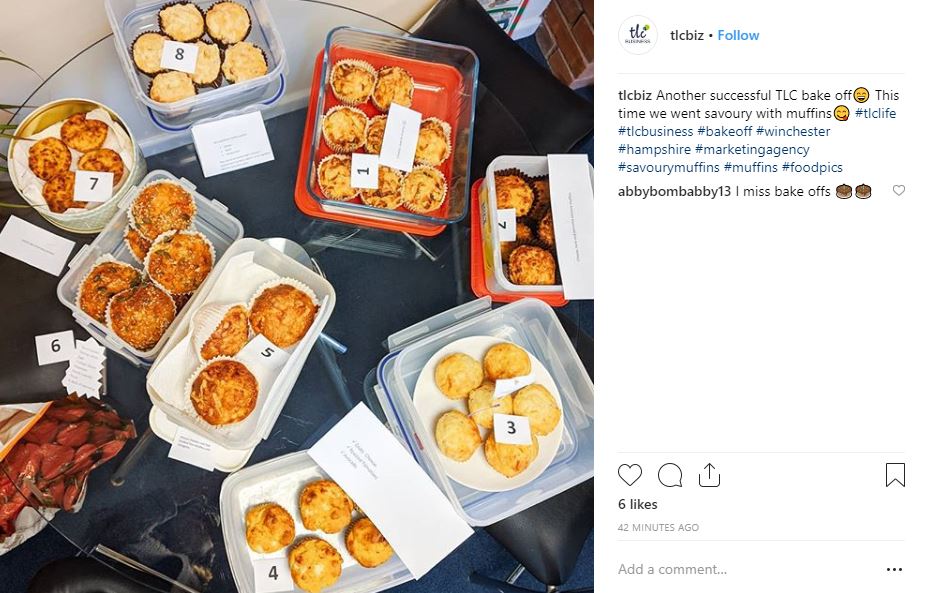
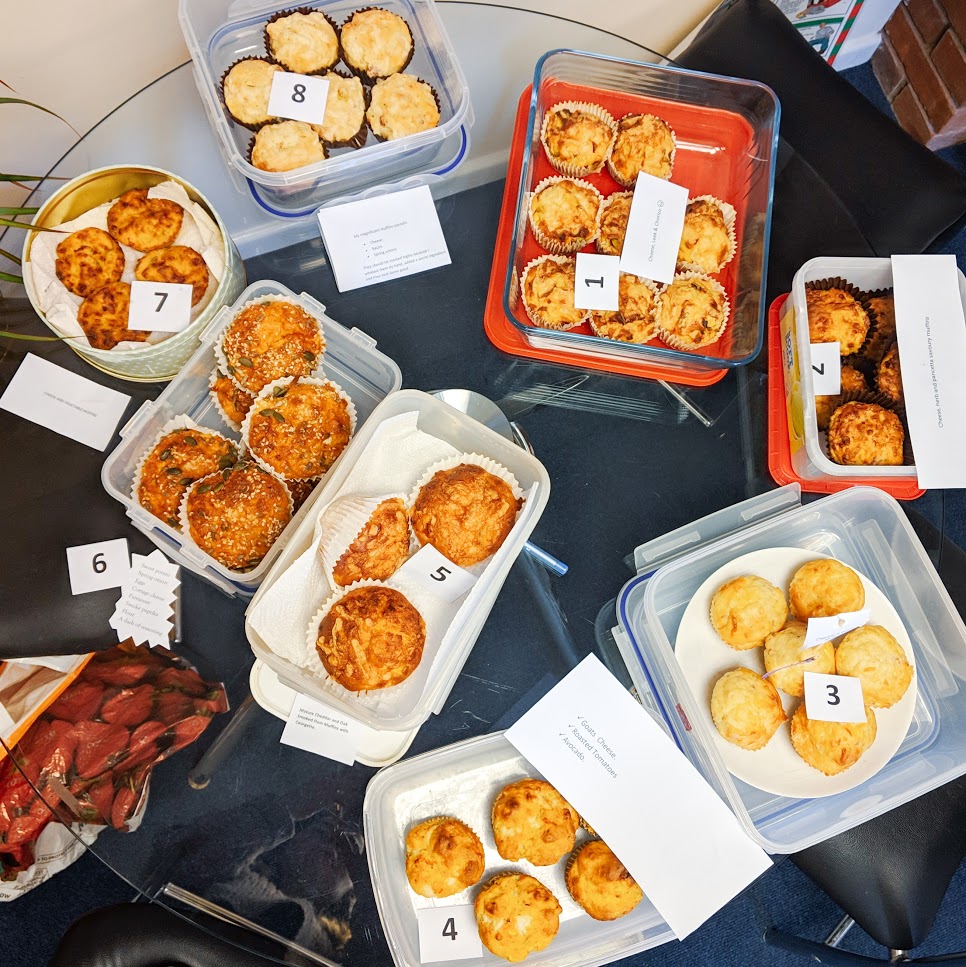
Today we held our first bake off of 2019, this time choosing to go for savoury muffins! From bacon and cheese, to sweet potato and parmesan – everyone put their own unique twist on the muffins – but it was Anna’s leek, onion & chorizio muffins which won the overall bake-off, with a total of 65 points for taste, appearance and technical. Congratulations Anna!
https://www.tlc-business.co.uk/wp-content/uploads/2019/01/bakeoffmuffins.jpeg967966tlchttps://www.tlc-business.co.uk/wp-content/uploads/2018/10/logooptimised.pngtlc2019-01-22 14:11:112019-01-22 17:35:07Our first 2019 bake off
With 2018 drawing to a close, it’s that time of year again when we review the marketing trends of 2018, what has been working, what hasn’t and what we’ll be doing in 2019.
Designed for SMEs, our free marketing lunch will provide SMEs with useful insights, tips, guidance and advice on how to get the most from your marketing in 2019.
What we will cover:
• Choosing the right marketing channels for SMEs
• ePrivacy regulation changes – GDPR take two? What to expect
• Digital Marketing and GDPR best practice
• Getting the biggest bang for your buck
• Social Media, PPC, SEO and more
If you’re an SME and would like more information about our event or to secure your place, get in touch today by emailing sophiewells@tlc-business.co.uk or by calling Sophie on 01962 600 147 to receive your free invite! This event is invite only, you must book and secure your place if you wish to attend.
https://www.tlc-business.co.uk/wp-content/uploads/2018/12/emailimage4-e1547726236132.jpg301500tlchttps://www.tlc-business.co.uk/wp-content/uploads/2018/10/logooptimised.pngtlc2018-12-05 16:38:342019-01-17 11:57:35Looking to Get More From Your Marketing in 2019? Join Us For Our Free Annual TLC Business Marketing Lunch in the New Year
The term Black Friday conjures up those scenes we’ve all seen on the news of frenzied chaotic shoppers grabbing anything they can get their hands on, seemingly regardless of whether they actually want the item. Undoubtedly, Black Friday is one of the biggest consumer shopping days of the year and generates billions of pounds in sales as retailers offer some of their most competitive deals of the year to customers. The annual event has become ever-bigger, year-on-year and is now perceived to mark the beginning of the Christmas shopping season. This year it will take place on Friday 23rd November. However, retailers typically release their deals much earlier, often lasting one or two weeks, and incorporating Cyber Monday (Monday 26th November 2018), another day dedicated to discounts by online retailers. As Black Friday falls before Christmas, the previously largest sales day, Boxing Day, is experiencing a decline in sales, as customers get ‘shopped out’ by the time it comes round, resulting in Boxing Day sales losing their appeal.
So where did Black Friday come from?
Black Friday originated in the US and always falls on the day after Thanksgiving. In the US, Americans are generally given several days off work for this holiday, therefore, US retailers saw it as a prime opportunity to make extra money by offering great savings on products. The day was given its name because it is considered the period before Christmas that retailers ‘move into the black’, meaning they are in a strong financial position and have enough money to cover their costs while reducing prices.
In the past, many shops have been known to release details of their discounts and offers at the very last moment, before their deals go live. Some also increase their offers, where stock persists, as the days go on, often resulting in sell-outs. Retailers can also be expected to stay open for longer and many offer online discounts and promotions now too.
The supermarket Asda takes credit for bringing Black Friday to the UK over a decade ago; however, they no longer participate, due to incidents of fights and brawls in stores across the UK, which one year saw customers wrestling over a television at an Asda store in Wembley. Instead, they offer alternative discounts on selected products that run on for longer instead of flash sales.
What to expect in 2018?
In 2018, we can expect Black Friday to see many retailers offering their deals and discounts for longer in the weeks leading up to Christmas. In recent years, when Black Friday deals were more akin to flash deals that lasted 24-hours or until stocks lasted, shopping centres were flooded with out-of-control consumers running in to stores as the doors open and fighting with other customers to grab the last products on the shelf. But with many retailers now dragging out their deals over many days, and in some cases weeks, to avoid the peak in footfall, and with many consumers opting to shop online, retailers are having to become more competitive with their offerings, as consumers have more time to research and consider the best deals. Footfall this year is expected to drop by 3.7% compared with Black Friday last year, and by 2.7% over the weekend as a whole, according to reports by The Springboard Group. Meanwhile, online transactions are expected to increase by 4% this year, although year-on-year growth of online sales has been at a slower pace compared to last year.
How does Black Friday affect marketing strategy?
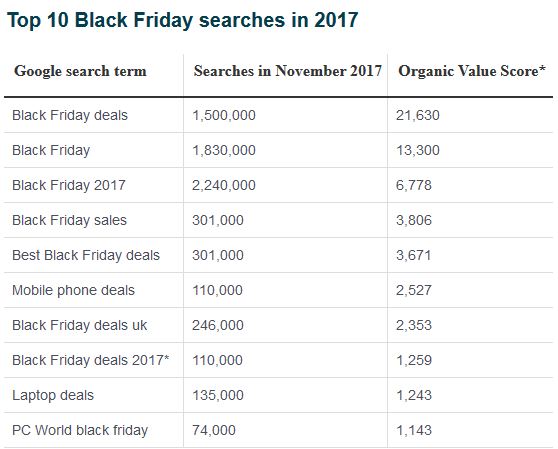
In November 2017, Google search encountered approximately 2,240,000 hits of the search term “Black Friday 2017”, meanwhile in this same period UK shoppers spent £1.4bn online, 11.7% more than the previous year. Without a doubt, it would be a missed opportunity if a business taking part didn’t optimise their website for SEO purposes to target searches around Black Friday Deals and drive their audience to a Black Friday-specific landing page, particularly for an e-commerce site. However, with many other retailers and businesses doing the same, the competition is soaring. Black Friday planning should therefore start well in advance. In-fact, the bigger retailers will have a consistent year-round Black Friday webpage on their website to secure themselves a space in the search engine’s index, which may also start to develop some traffic from as early as August, when consumers start thinking ahead of the deals. Once the page is established, you can work to improve the user and page experience; which will help improve your search engine ranks. A month or so in advance of the big day the marketers are busy. We are seeing Black Friday paid ad campaigns pop up, re-marketing kicking in and social media ads start appearing in our feeds, not to mention the flurry of promotional emails filling up our inboxes.
With retailers fighting one another to offer the best deals and competitive prices, strategies such as offering exclusive access to the first 100 customers, incentives for free products or entries into competition draws can help to make brands stand out. Some businesses may also take a more ethical approach to the event and donate a percentage of profits made to their favourite charity.
Many brands/businesses will also join forces with other retailers or make partnerships with publishers to further increase their audience reach. In 2017, one of the most shared content pieces from a UK-relevant website was a news article detailing Virgin Train’s Black Friday Offer in the Liverpool Echo. Whilst it was not a very long piece, it still managed to capture 7,700 engagements on Facebook alone.
In this cyber age, people who fall into the categories of ‘influencer’ or celebrity can also be found promoting products to consumers through social media and PR. Around the Black Friday event, we can expect ‘famous’ faces at the forefront of brand campaigns, promoting a variety of “unmissable” Black Friday offers.
Are retailers really offering the best deals of the year?
The whole frenzy around Black Friday attracts massive hype and makes customers feel pressured to spend their money or miss out on the “biggest deals of the year”. But according to research by idealo.co.uk, 9 out of 10 products included in Black Friday deals are actually cheaper at other times in the year. The report analysed 21,047 products over a 12-month period and found that only electricals such as laptops were offered at a bargain price, whilst most other products could be found cheaper during different sales and times of the year. The report also revealed that the most popular products to purchase over the Black Friday event were smartphones, but on average they were £72 cheaper in early August.
Some retailers may also feel that Black Friday discounts are counter-productive and are therefore reluctant to offer a significant discount. As Black Friday typically brings Christmas spending forward to mid-November, naturally they see a decline in footfall and sales in the final weeks before Christmas; which should be the peak trading period leading into Boxing Day and January sales.
So, what are your thoughts on Black Friday? Does it deserve the hype it receives? Let us know your experience by emailing us on info@tlc-business.co.uk!
https://www.tlc-business.co.uk/wp-content/uploads/2018/11/blackfriday.jpg400495tlchttps://www.tlc-business.co.uk/wp-content/uploads/2018/10/logooptimised.pngtlc2018-11-21 09:22:442019-01-17 11:52:59Black Friday: The biggest consumer event of the year?
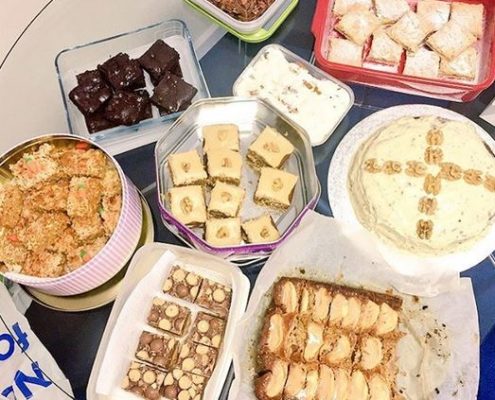
With the Great British Bake Off final taking place this week, it was time for another TLC bake off! Opting for a traybake theme, the team baked several delights including brownies, cakes and rocky roads.
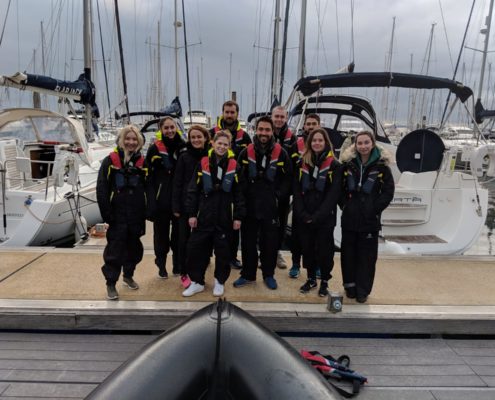
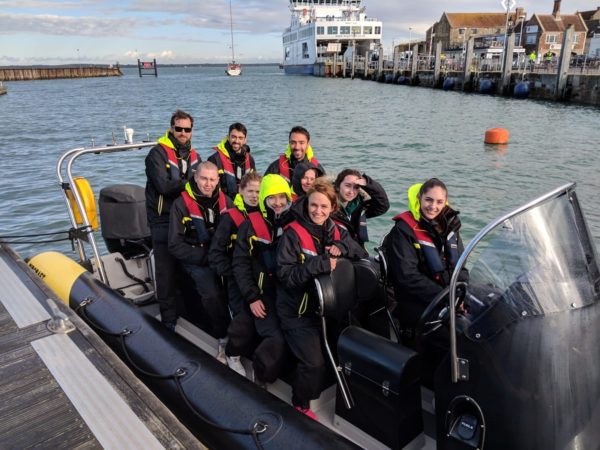
It’s not every Friday that you get on a high-speed rib boat, to cruise across the Solent for a treasure hunt! As part of our most recent team day out, the team were split into two groups, to go head-to-head in a jam packed treasure hunt that saw us visit several locations – including The Needles, Cowes and Hamble. After a full day at sea, the team were treated to a well-deserved slice of cake and team Edamame were crowned the winners, with an overall total of more than 500 points!
https://www.tlc-business.co.uk/wp-content/uploads/2018/10/boattrip.jpg400495tlchttps://www.tlc-business.co.uk/wp-content/uploads/2018/10/logooptimised.pngtlc2018-10-29 11:22:222019-01-17 11:50:19TLC brave the choppy Solent waters for a jam-packed treasure hunt
In case you’ve missed it over the last few years, Halloween has taken on a lot more commercial significance to businesses and retailers. Heavily influenced by the holiday’s popularity in America, Halloween in the UK has become bigger, spookier and more important than ever for engaging with customers and prospects. In fact, businesses are even beginning to market Halloween products as early as August; and it seems to be working, with spending surveys highlighting a consistent year-on-year increase in consumer spending associated with the autumnal holiday. It seems that as the schools go back, enthusiastic ‘halloweeners’ take to the shops to find that perfect costume and start preparing for the ghostly festivities. With the eerie holiday just around the corner, TLC Business have taken a look at some of our favourite (and unnerving) Halloween campaigns of recent years. Which is your favourite?
1. Asda
This 1980s themed Halloween commercial for Asda was launched in Autumn 2017. The advert featured a family Halloween party with multiple generations, from kids to the grandparents, dancing freakishly to 1986 hit ‘Word Up’ by Cameo. The advert, entitled “Home For All Things Haunted”, showcased the wide selection of Asda Halloween costumes, cakes, pumpkins and decorations, positioning the supermarket as the go-to store for all Halloween supplies. The advert had a Shazam feature, enabling viewers to scan the ad on their devices; which would then re-direct them to a custom Halloween landing page on their website with their list of holiday-themed products. The campaign also ran alongside social media posts, a radio ad and PR.
2. Burger King
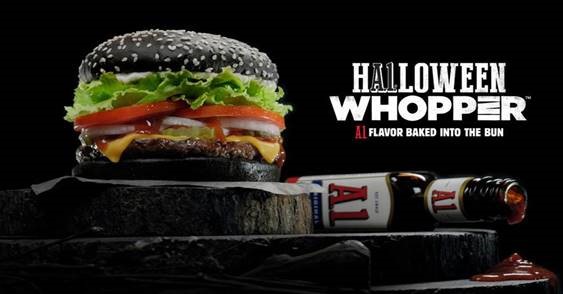
In 2015, the hashtag #GreenPoop became rather popular on Twitter, all down to the Burger King ‘Halloween Whopper’ burger, featuring a suspiciously black bun. The coloured bun trend started in Japan, where they have a variety of unusually coloured burger baps; including pink and red. The Halloween Whopper was brought to UK Burger King stores nationwide for a limited time until October 31st 2015. The black bun, which used a natural colourant, was also BBQ flavoured. As the hashtag that started trending might indicate, it was the burger’s effect on customers’ stools, turning them a funky green colour, that caught the public’s attention. We don’t know what’s spookier, the black bun or the after effects?
3. M&Ms
In 2016, the memorable red and yellow M&Ms featured in a series of TV commercials leading up to Halloween. Employing comical references to trick or treating, red and yellow opted to stay in for fear of getting eaten, but that didn’t stop red eating a yellow M&M and referring to itself as a cannibal. M&Ms’ clever approach to marketing has helped keep the popular chocolate treat going for over 75 years.
4. Topshop
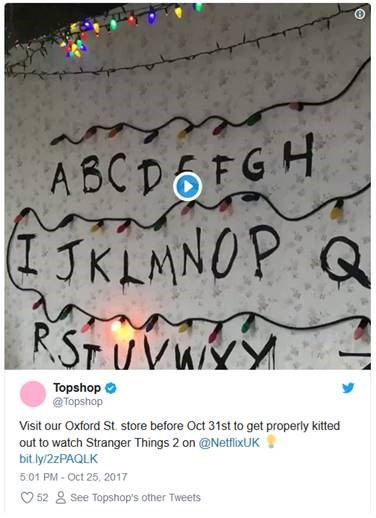
Stranger Things is of one Netflix’s most popular original shows and with their announcement of the Season 2 release date last October, high-street retailer Topshop curated a Stranger Things product line which launched at their Oxford Street flagship store. The store itself was transformed and featured interactive reconstructions of the Stranger Things set, including the Hawkins laboratory manned by actors, where customers could be tested for telekinetic powers by moving a can of coke using the power of their mind. The product line reportedly sold out immediately in store and online, leaving many Stranger Things and Topshop fans disappointed. The release was just in time for Halloween and the store also held exclusive screenings of the show.
5. Fanta
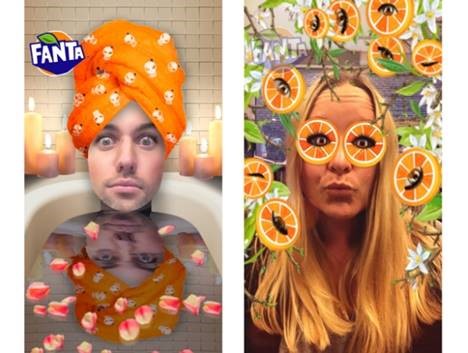
For several years, the Coca-Cola owned brand Fanta has been releasing Halloween-themed cans featuring skulls, witches and vampires in a playful, spooky twist on their iconic branding. In 2017, the campaign also included a series of snapchat filters and lenses, where you could transform yourself into a cracked China Doll or bathe in a bath of blood.
What are some of your favourite Halloween campaigns? Get in touch by emailing us at info@tlc-business.co.uk.
Trying to get heard amongst all the competing advertising noise out there is not easy. Estimates suggest we are exposed to over 10,000 brand / company messages each day. Clearly, advertising is highly competitive. Millions of different companies and brands are fighting for the attention of their target audiences each day. Online, in print, on TV, radio, billboards, mobile and more, advertisers are in danger of drowning each other out. With this in mind, companies are always on the lookout for unique and innovative ways to get their message across.
This week, we thought it would be interesting to take a look at some of the more unusual advertising techniques. Here are some of our favourites.
1. Wi-Fi network names
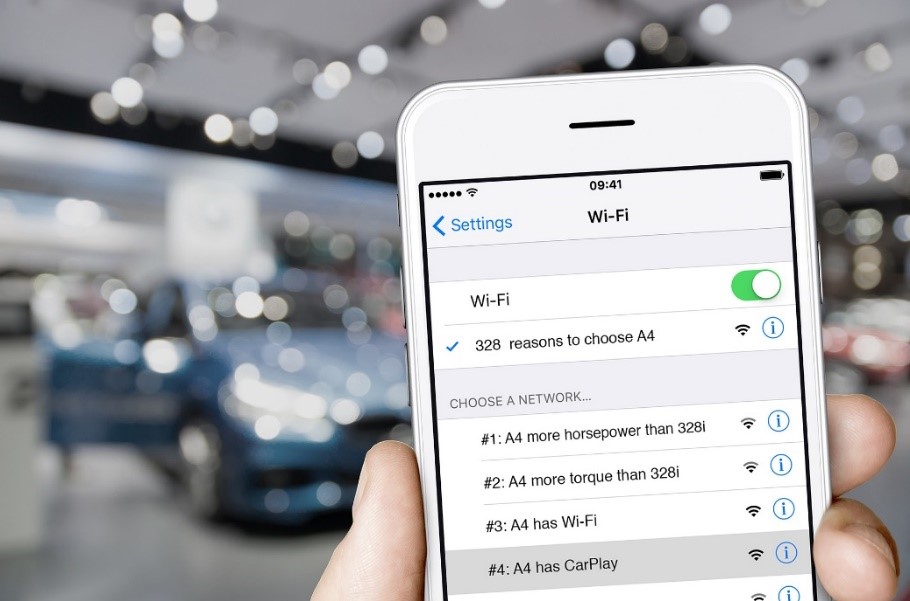
In March 2016, Audi attended the New York auto show with a unique and clever advertising hack. The German car company set up a number of free Wi-Fi networks and gave each network a name that doubled up as an advertisement for the back-then brand new Audi A4. Each network was named with one reason to choose the A4 and also bashed their rival BMW 328i at the same time, including statements such as “#:1 A4 more horsepower than 328i” and “#4: A4 has CarPlay”. It’s not the first time a company has used Wi-Fi networks to double up as advertising, but we can see how it could be an effective and amusing marketing technique to get your brand or product stand out, particularly for an event where free Wi-Fi is just about the first thing mobile users look for.
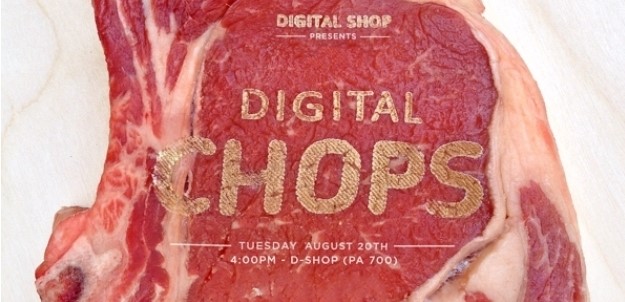
2. On our food Using a laser etching technique, brands have even found a way to safely advertise on our food! This advertising technique is most commonly found in Butcher’s markets to advertise sellers produce, or in the health and fitness industry for advertising the likes of gym memberships or nutritional advice. Laser etching or printing on foods has typically been used in the food industry to mark produce with dates and numbers to identify their location or factory source. Taking inspiration, some brands have now hijacked this technique, adding messaging to their food. Alongside meat, the technique has been seen on egg shells and even the skins of fruit and vegetables, including avocados, melons and potatoes.
3. Human Body
Have you ever heard of forehead advertising? No, us neither! But some people are willing to do bizarre things to make money, one of which is getting yourself tattooed with a logo or company’s website address. The tattoos can be temporary or permanent and are not just limited to the forehead; people have sold areas of their arms, neck, chest and legs to make some serious buck! Similarly, a Japanese advertising firm recently sold advertising space on commuters armpits to a beauty treatment clinic. The advertisements measure nearly 2” x 4”, are placed in the armpit and cost approximately £68 for one hour of exposure on a commuter train or bus. We’re not sure if this advertising technique will take off in the UK but keep an eye out.
4. Captchas
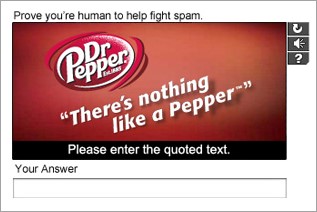
We’re all familiar with captchas, those annoying boxes that appear on websites. They often appear when entering personal credentials to purchase something online or to access an account. A captcha will usually ask you to type a series of letters or a phrase into a box to prove that we’re not spam robots. They display text in a distorted font, a range of upper case and lower case letters or with a line straight through, supposedly making it too difficult for anything non-human to decipher. Sometimes they may even show a series of images to click on or a short video with a message at the end which you need to copy into the box. The aim is to ensure that a response is not generated by a computer, but copied by a human behind a screen and they are deemed necessary for protection against spam. While banner ads can often be overlooked and ignored, captchas require a user’s undivided attention and advertisers caught onto this. Captcha’s use of words and pictures are more often random and have no significance, but some companies have purchased captcha space to use them to advertise their names, slogans and brand. They can also include clickable links to their website and run on a PPC model or cost per impression basis. They might be irritating, but they cannot be ignored.
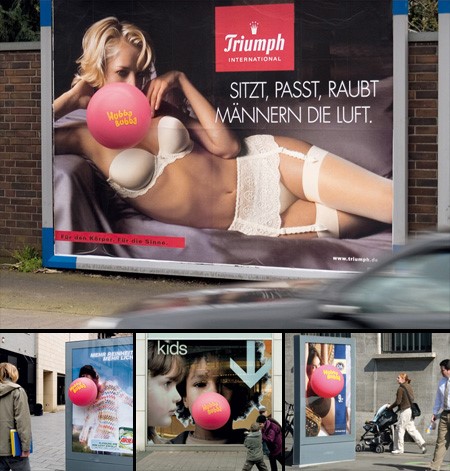
5. Hi-Jack other advertisements Advertisements can be costly and coming up with an ad that is creative and unique can be hard work, costly and time consuming. So why not save the money and effort of designing an ad and instead deface another advertisement by placing your own label right on top of it? In Germany, Hubba Bubba adopted a questionable-at-best guerrilla advertising campaign which involved using other brands’ advertisements to display their iconic bubble gum. They hijacked billboards advertisements containing people, including a model advertising a lingerie brand, and added pink balloons with the label Hubba Bubba over their mouths to replicate a bubble gum bubble. Hubba Bubba is iconic for their creative and unusual advertisements and this type of guerrilla marketing definitely caught people’s attention.
What are some unique or clever advertising techniques you’ve come across? We’d love to hear your thoughts! Email us at info@tlc-business.co.uk.
https://www.tlc-business.co.uk/wp-content/uploads/2018/09/clipnclimb2.jpg400463tlchttps://www.tlc-business.co.uk/wp-content/uploads/2018/10/logooptimised.pngtlc2018-09-18 16:42:352018-10-18 16:17:15VIDEO: TLC take on Clip n Climb Chelsea